
Titanium Oxide Nanotube Arrays for Medical Implants
Research Origins and Technology Development
The nanotube surface treatment evolved from solar panel research by various groups and biomaterials research by Sungho Jin, PhD, at the University of California, San Diego (UCSD). Others, including Amit Bandyopadhyay, PhD, and collaborating researchers at Washington State University (WSU); Craig Frederick, PhD, Tolou Shokuhfar, PhD; and their team at Michigan Technological University, and Masa Ishigami, PhD’s team at the University of Central Florida (UCF), have helped to enhance the technology. Established companies specializing in medical implant surface treatments have helped to scale and commercialize the technology.
Understanding the Nanoscale Surface Structure
Our Core Values are at the heart of our business because they define who we are, how we work, what we believe in, and what we stand for. Our core values set out how we act and how we expect you to be treated as a partner of ours.
Applications in Orthopedic Implants
Any implant surface that requires stable fixation against bone, such as a hip, knee, ankle, shoulder, hand, or spinal implant, can be enhanced by nanotubes.
How Does It Work?
It mimics the environment around the implant, encouraging stem cells to respond as if the implant surface were another cell.
The super-absorbent, ultra-hydrophilic surface enhances tissue cell attachment.
The cell then spreads and branches out on the implant surface.
The stem cell differentiates to match the cells that are around the nanotube surface.
If around bone cells, osteoblasts form, and the mineralization process begins.
If near cartilage, chondrocyte cells form, starting cartilage regeneration.
Testing
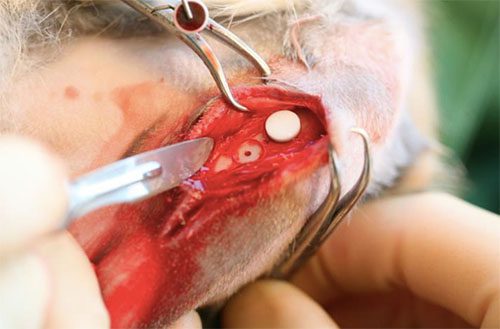
“In vivo studies have shown that titanium implants that have nanotubes on them have a nine times greater osseointegration bond strength as compared to implants that don’t. We also see faster cell differentiation; the bonding happens weeks faster than it would without nanotubes. We’re interested in allowing patients to walk on or fully use their implants faster. We’re trying to speed that up not by days, but by weeks and perhaps months.”
Sungho Jin, PhD.
Our Nanotube Surface Edge
Boost medical device performance with our nano-engineered nanotube surfaces built for real-world durability and precision. See how our team can support your next step.